
Last updated November 22, 2026
 Sweep & inspection
 Caps & crowns
 Flue relining
 Masonry repair
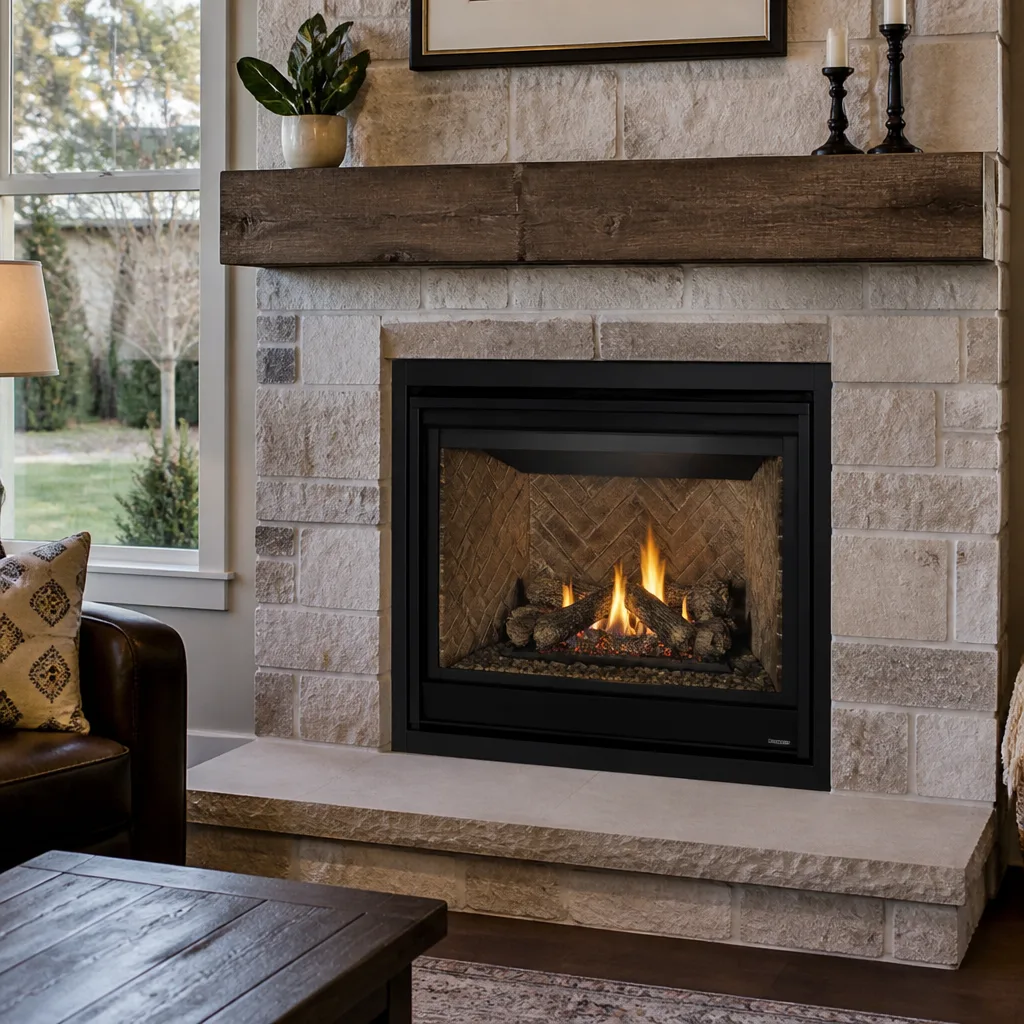 Gas fireplace service
Level 1 sweep and inspection to the NFPA 211 annual standard - flue, crown, cap, and flashing checked and photographed
Chimney sweep logs do not sweep chimneys. They loosen some creosote - which then falls where a brush and vacuum still have to collect it.
Chimney Cleaning Warning Signs: A Sunset Park Homeowner’s Reference Guide
Most homeowners think a chimney problem shows up as smoke in the living room or a fire that won’t light. In our experience, the loudest warnings are quieter than that: a faint sweet smell on a warm afternoon, a white bloom spreading across the brick, a puff of soot that settles on the mantel after a cold night. A strong wood smell in your living room on a warm day with no fire burning isn’t a quirk of old construction. It’s glazed creosote off-gassing through a crack in your flue tile, and it usually means the liner has already been compromised. This guide translates what you can smell, see and hear into plain-language diagnoses, so you know whether to stop using the fireplace today or simply book a sweep. We’ll walk through the signs that matter in Sunset Park, from the firebox to the crown.
Quick Answer
The warning signs that a Sunset Park chimney needs attention fall into four groups: smells (sweet creosote, damp masonry, or gas odors), things you can see inside the firebox (spalling firebrick, crumbling mortar, rust stains, white efflorescence), draft problems (smoke rolling back, weak draw, reversed draft), and exterior damage visible from the ground (broken cap, lifted flashing, staining, a cracked crown). Stop using the fireplace immediately if you smell gas, see heavy creosote flaking inside the flue, notice smoke backing into the room on every fire, or find cracked or displaced firebrick. Everything else can usually wait for a scheduled sweep and inspection.
Styles & brands we work with
- Sweep & inspection
- Caps & crowns
- Flue relining
- Masonry repair
- Gas fireplace service
Table of Contents
- What your nose tells you: the three chimney smells and what each means
- Inside the firebox: spalling brick, mortar joints, rust and efflorescence
- Draft and smoke behavior: when it’s an obstruction and when it’s pressure
- Exterior warning signs you can see from the ground
- Stop today or wait for the next sweep?
- How often Sunset Park chimneys should be swept and inspected
- Common mistakes to avoid
- Frequently asked questions
What Your Nose Tells You: The Three Chimney Smells and What Each Means
Smell is the most underrated chimney warning sign, and in Sunset Park it’s often the first one homeowners notice. A chimney that’s working correctly shouldn’t announce itself when there’s no fire burning. If it does, the smell itself tells you which system has a problem.
Here’s how we separate them.
- Sweet, asphalt-like or tar-like smell. This is creosote, specifically glazed creosote. It’s the residue from burning wood at too low a temperature or with too little air, and when it hardens into a glassy coating inside the flue it can off-gas on warm days. A strong creosote smell with no fire burning is a sign that the flue has lost integrity somewhere, because an intact liner doesn’t let the smell into the living space. Glazed creosote is also the most flammable form, so this is a sign to treat seriously.
- Damp masonry or mold smell. This points to water getting into the chimney structure. A failed crown, cracked flashing or a missing cap lets rain soak into the brick, and the result is a musty, wet-stone odor that gets worse after rain or in humid weather. Water damage compounds over time: it spalls the brick, rots the mortar and erodes the flue tile.
- Gas or sulfur smell from a gas appliance. If your chimney serves a gas furnace, boiler or water heater, any unusual smell is not a chimney-maintenance issue. It’s a safety issue. Shut the appliance off and have it checked by a qualified gas technician before anything else. Never light a fire near a suspected gas leak.
Sunset Park’s mix of older rowhouses, co-ops and converted multi-family buildings means chimney smells often go unnoticed until they seep into a neighbor’s unit. If you smell a chimney odor from a shared wall, it’s worth checking both sides. A quick inspection tells you which system is at fault.
Inside the Firebox: Spalling Brick, Mortar Joints, Rust and Efflorescence
The firebox and the visible flue above it are where structural warnings show up first. Every one of these signs points to a specific underlying cause, which is why we look before we clean.
Spalling firebrick
Firebrick is rated for high heat, but it doesn’t last forever. When the face of the brick flakes off or the corners crumble, that’s spalling. It usually means the firebox has been repeatedly overheated or has absorbed water from a failed crown or cap. Spalled firebrick in a Sunset Park rowhouse fireplace is common in older units, and once a brick is spalled it needs to be replaced, not patched. A cracked or displaced brick can let heat reach the masonry behind the firebox, which is a fire risk.
Deteriorating mortar joints
Look at the seams between the firebrick and the surrounding masonry. When the mortar recedes, turns sandy or falls out entirely, the joints are failing. This can be caused by normal heat cycling, water infiltration, or an acidic flue environment from years of burning without proper sweeping. If the joints are crumbling, the firebox is no longer structurally sound enough to contain the fire safely.
Rust staining
Rust stains inside the firebox or on the damper usually mean moisture is coming down the flue and pooling around metal components. The source is almost always above: a missing cap, a cracked crown, or failed flashing at the roofline. Rust won’t fix itself, and it eventually seizes the damper.
White efflorescence
That chalky white powder blooming on the brick is efflorescence, the mineral deposits left behind when water moves through masonry and evaporates. It’s harmless on its own, but it’s a reliable indicator that the brick is taking on water. Left alone, efflorescence progresses to spalling and mortar loss.
If you see any of these inside the firebox, the priority is not a cleaning, it’s an inspection. Our chimney sweep service always begins with a look at what the flue and firebox are actually telling us.
Draft and Smoke Behavior: When It’s an Obstruction and When It’s Pressure
Smoke that rolls into the room instead of up the flue is a warning that gets attention. The tricky part is that draft problems have two very different causes, and treating one as the other wastes money and doesn’t fix anything.
Obstruction
When the flue itself is blocked, the fire can’t draw. The most common culprits in Sunset Park:
- Heavy creosote buildup. A thick layer narrows the flue and eventually restricts draft entirely.
- Nesting material. Birds, squirrels and other animals get into uncapped chimneys and build nests that block the flue.
- Fallen masonry or a collapsed liner section. A piece of flue tile or mortar that drops into the flue can catch debris.
- A closed or broken damper. Simple, but often missed.
A blockage is a hard stop. Don’t burn until it’s cleared.
Pressure and air-sealing problems
Here’s where older Brooklyn buildings get tricky. Weatherized apartments and rowhouses that have been tightened up over the years can become too air-tight, so the fireplace competes with exhaust fans for the air it needs. A bathroom fan or a kitchen hood running in the same apartment can pull enough air to reverse draft in a marginal chimney. Newer windows, added insulation and sealed penetrations make this worse, especially in smaller units. The fire draws weakly, smoke drifts into the room, or the chimney smells of soot even when it’s clean. In these cases the fix isn’t a sweep, it’s balancing the air supply: crack a window, check the fan situation, and have the chimney inspected for flue size.
The way to tell the difference is to watch what happens when you eliminate the fans and crack a window. If smoke still rolls in, the problem is in the flue and needs an inspection. In our experience, a quick camera inspection settles it either way.
Exterior Warning Signs You Can See From the Ground
You don’t have to climb a roof to catch most chimney problems. A few of the most important signs are visible from the sidewalk with binoculars. Walk across the street or down the block and look up.
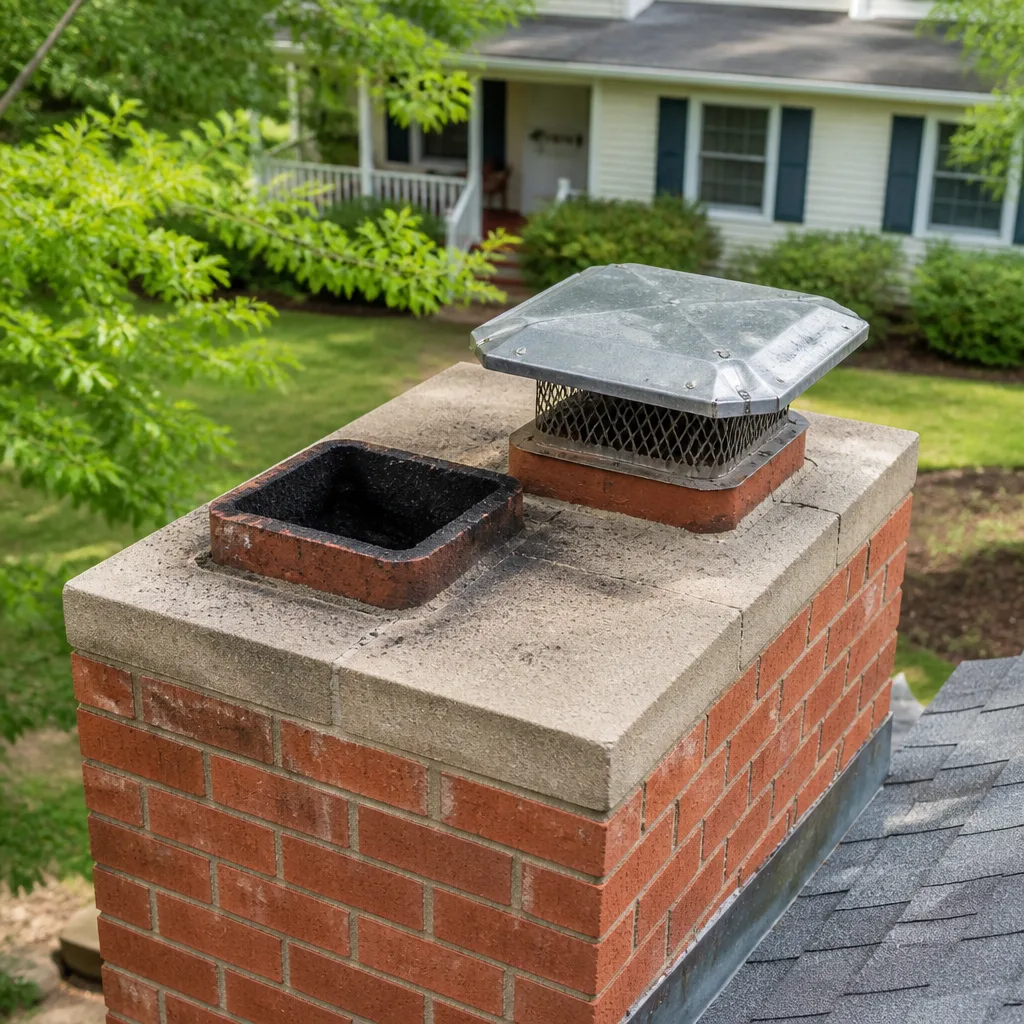
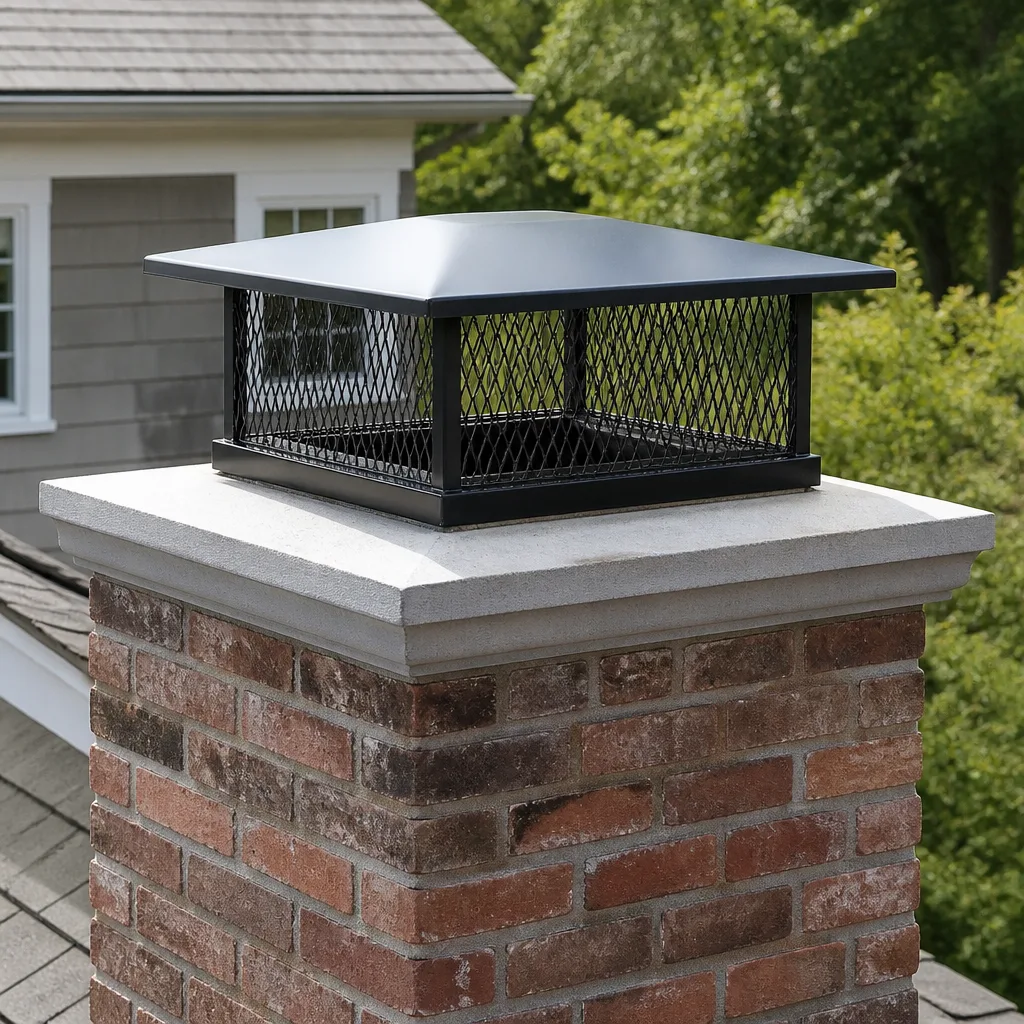
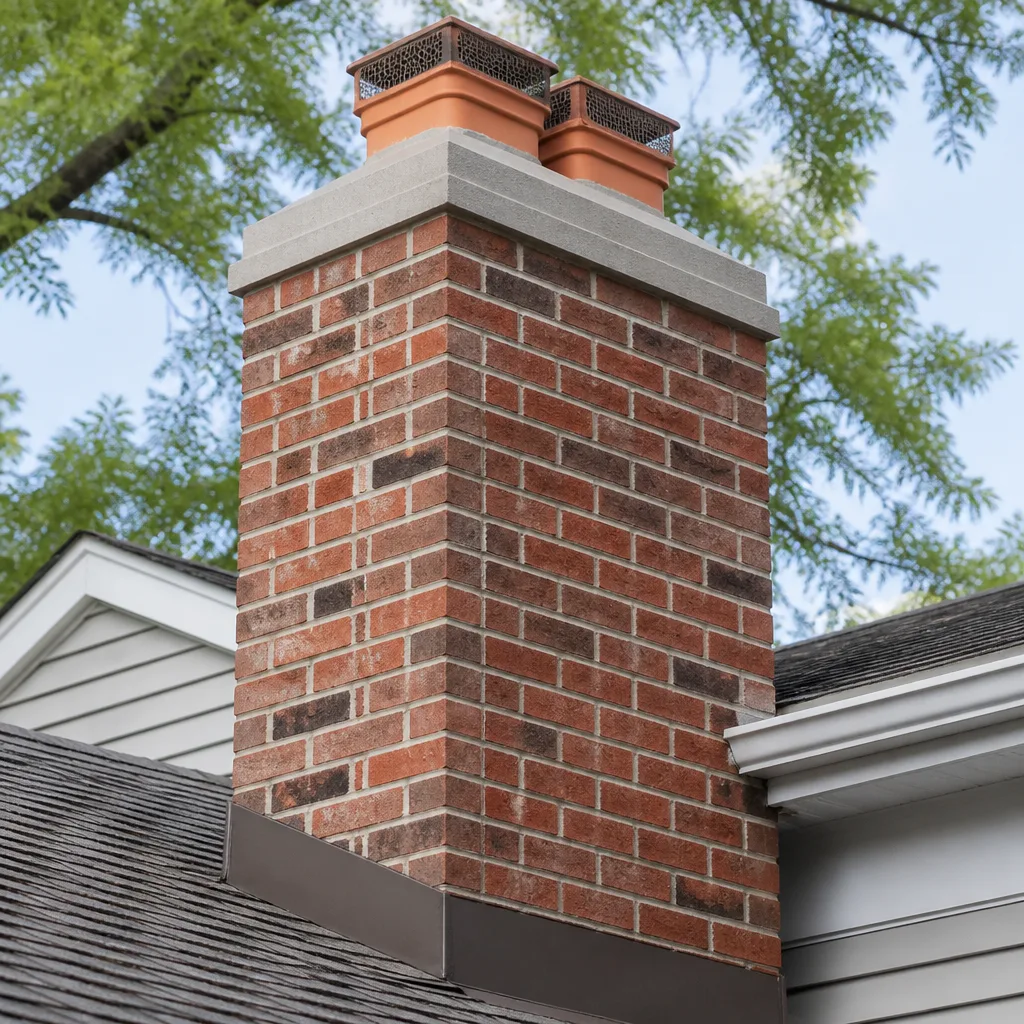
- A broken or missing chimney cap. The cap is the metal or mesh cover on top that keeps out rain, animals and debris. If it’s rusted through, knocked askew by wind, or missing entirely, water and wildlife have direct access. This is one of the clearest signs and one of the easiest to fix with chimney cap & crown work.
- Missing or lifted flashing. The flashing is the metal seal where the chimney meets the roof. When it’s lifted, cracked or pulling away, water gets behind the roof surface and into the attic and living space. This is a roof-leak warning, not just a chimney one.
- Staining on the brick face. Dark streaks below the crown or a green-black cast on the brick mean water is running down and the crown or cap is failing. Efflorescence on the exterior faces tells the same story.
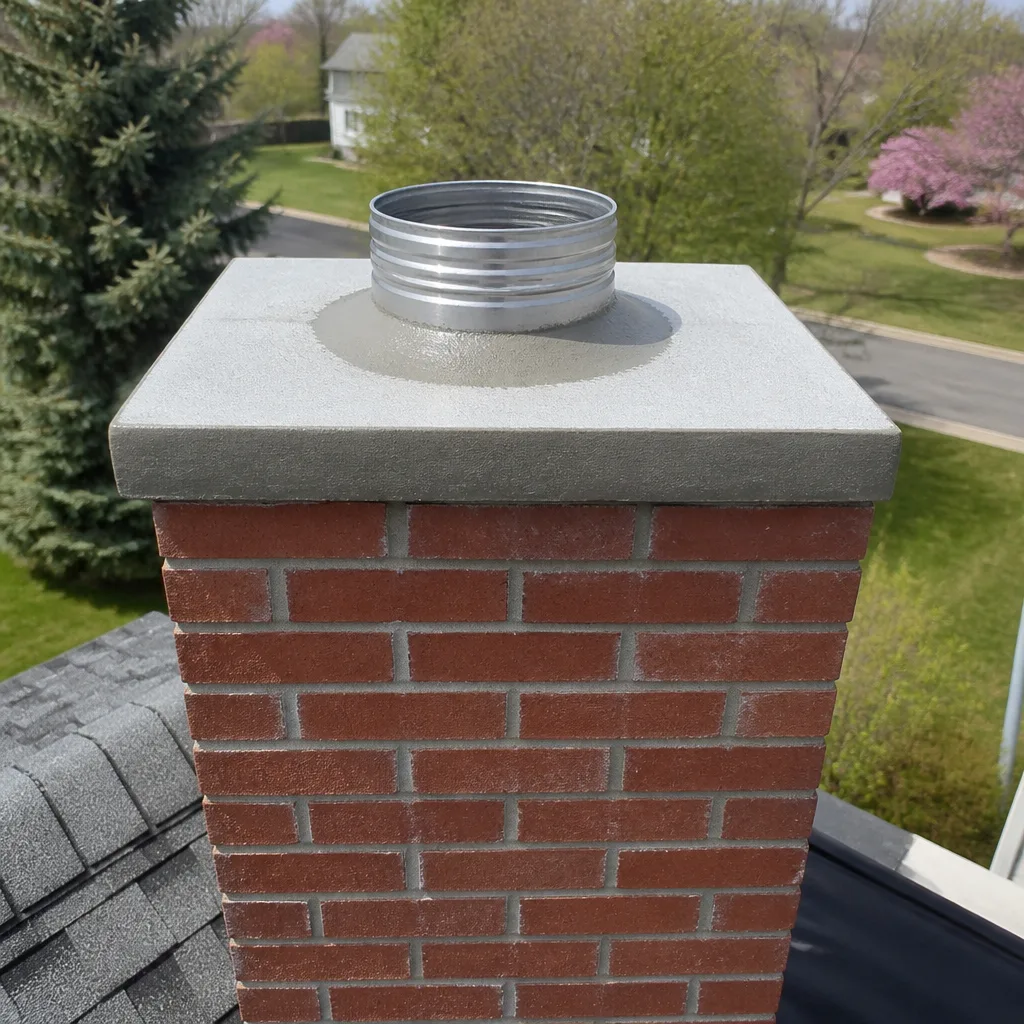
- A deteriorated crown. The crown is the sloped concrete or mortar cap at the top of the chimney that sheds water. When it’s cracked or crumbling, water goes straight into the structure. A failing crown is often the root cause of everything you find inside the firebox.
If any of these exterior signs is present, book an inspection rather than scheduling a routine sweep. The chimney repair side of the trade handles crowns and flashing; a sweep-only crew will just tell you what they see.
Stop Today or Wait for the Next Sweep?
Not every warning sign is an emergency. Knowing which is which saves you from both worry and unnecessary cost. This is the single most useful list in this guide, so bookmark it.
Stop using the fireplace immediately if:
- You smell gas near a gas appliance or from the flue.
- Smoke backs into the room consistently, even with fans off and a window cracked.
- You see heavy, flaky or glassy creosote inside the flue when you look up with a flashlight.
- Firebrick is cracked, displaced or missing, or the mortar joints between firebrick are crumbling.
- You find rust stains inside the firebox that weren’t there before, especially after rain.
- The damper doesn’t open or close properly.
- You’ve had a chimney fire, even a small one. Chimney fires can damage the liner without visible clues from the room, so treat any suspicion as a reason to inspect before the next burn.
You can safely wait for a scheduled sweep if:
- You only see light soot buildup on the firebox walls.
- The crown looks intact and the cap is in place.
- There’s a mild creosote smell with no fireplace use, no rust and no smoke problem.
- You’re due for a routine annual or seasonal check and nothing new has changed.
When in doubt, don’t guess. A quick inspection settles it in an hour. The cost of a sweep is always less than the cost of ignoring a real sign.
How Often Sunset Park Chimneys Should Be Swept and Inspected
A chimney should be swept whenever there’s roughly a quarter inch of creosote buildup in the flue, and inspected once a year whether or not it’s used. For most Sunset Park households that use the fireplace regularly through the colder months, that means one sweep and one inspection per year, done before the burning season starts.
There are local reasons to stay on that schedule. Sunset Park’s housing stock is old. Rowhouses and converted multi-family buildings often have original flue tile that’s already showing its age, and where a chimney serves both a fireplace and a gas appliance, the shared flue gets double the wear. Weather matters too: the freeze-thaw cycle of a New York winter works on any crack in the crown, and rain soaking into an unsealed cap or flashing compounds year after year. That’s why we treat a sweep as the starting point and an inspection as the real diagnostic step.
Some signs compress the schedule. If you notice heavier burning than usual, if the wood has been wet or unseasoned, if you’ve had any of the smells or sightings described above, or if this is your first winter in a home where you don’t know the last time the chimney was serviced, have it inspected sooner. Real estate transactions also require a formal inspection, and it’s a good idea to know what the last owner knew.
We book sweeps on a scheduled basis, not a same-day promise. That’s deliberate. The urgency here is seasonal (before burning season) rather than hourly, and a booked sweep with a camera inspection is worth more than a rushed one. Call to get on the schedule well before you plan to light the first fire.
Common Mistakes to Avoid
- Assuming a clean-looking firebox means a clean flue. Soot on the firebox walls says nothing about what’s happening up the flue. A chimney can look fine from the room and still have glazed creosote or a cracked tile two feet up. The camera tells the truth.
- Burning unseasoned or wet wood to “use it up.” Damp wood burns cool and leaves more creosote; it’s one of the fastest ways to build up the very residue you’re trying to avoid. In Sunset Park, wet wood stored outside gets wetter through a humid summer, so plan ahead.
- Ignoring a smell because “the fireplace is off.” A chimney smell with no fire burning is the strongest sign that the flue is not sealed. It’ll get worse, not better, and it’s usually pointing at a liner crack or a failed cap.
- Letting a sweep-only crew handle a structural problem. If the firebox is spalling or the crown is shot, you need repair capability, not a cleaning. Ask what happens if the sweep finds a problem. If the answer is “we’ll refer you out,” you’ll be paying twice.
- Covering up a leaking chimney instead of fixing it. Painting over efflorescence or caulking a lifted flashing hides the symptom and traps the moisture inside the masonry. Water damage always finds another way out.
- Using a fireplace in a weatherized apartment without checking draft first. Modern air-sealing is good for heating bills and rough on naturally drafting chimneys. Run a test fire with the fans off before committing a whole evening to a fire that smokes.
- Waiting for the first cold week to book a sweep. Everyone else does the same thing at the same time. Book in the off-season so you’re not the one whose chimney is dirty when the fire is already lit.
See the difference
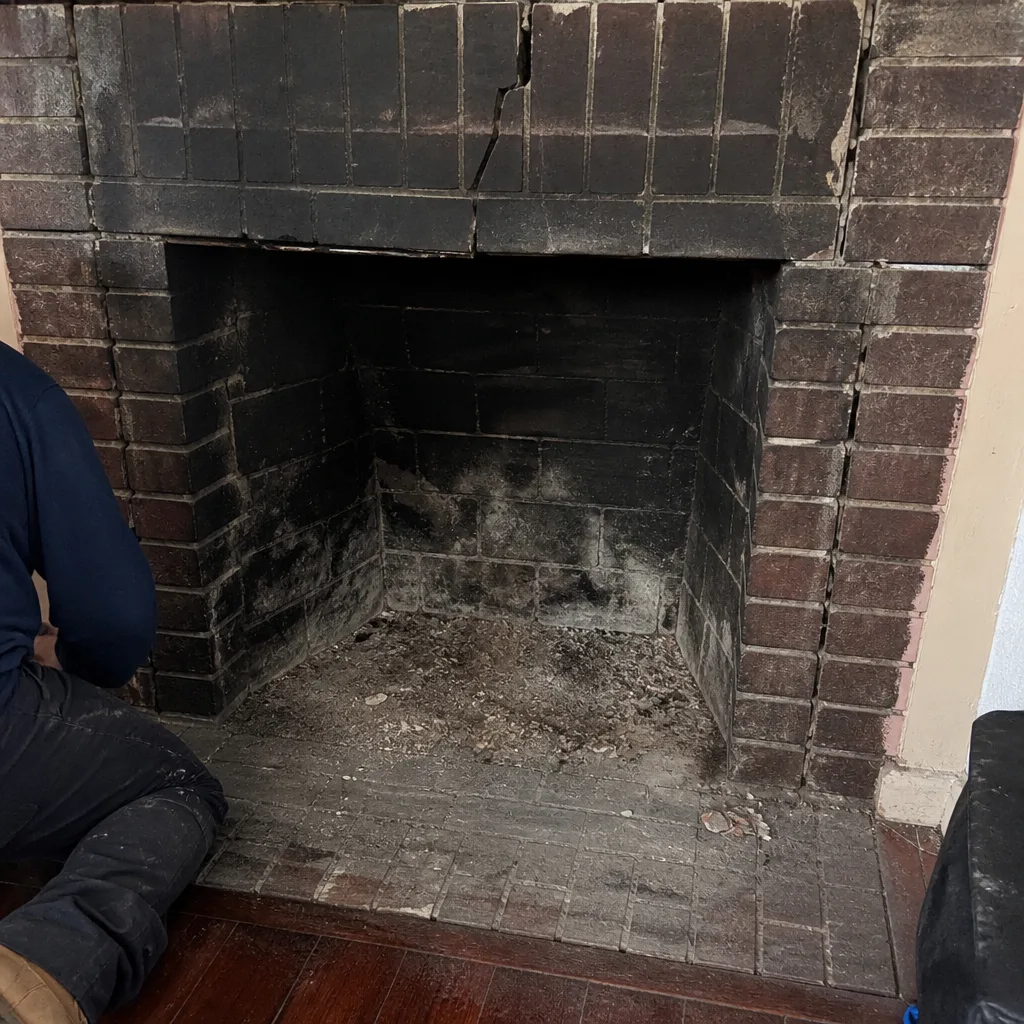 Before
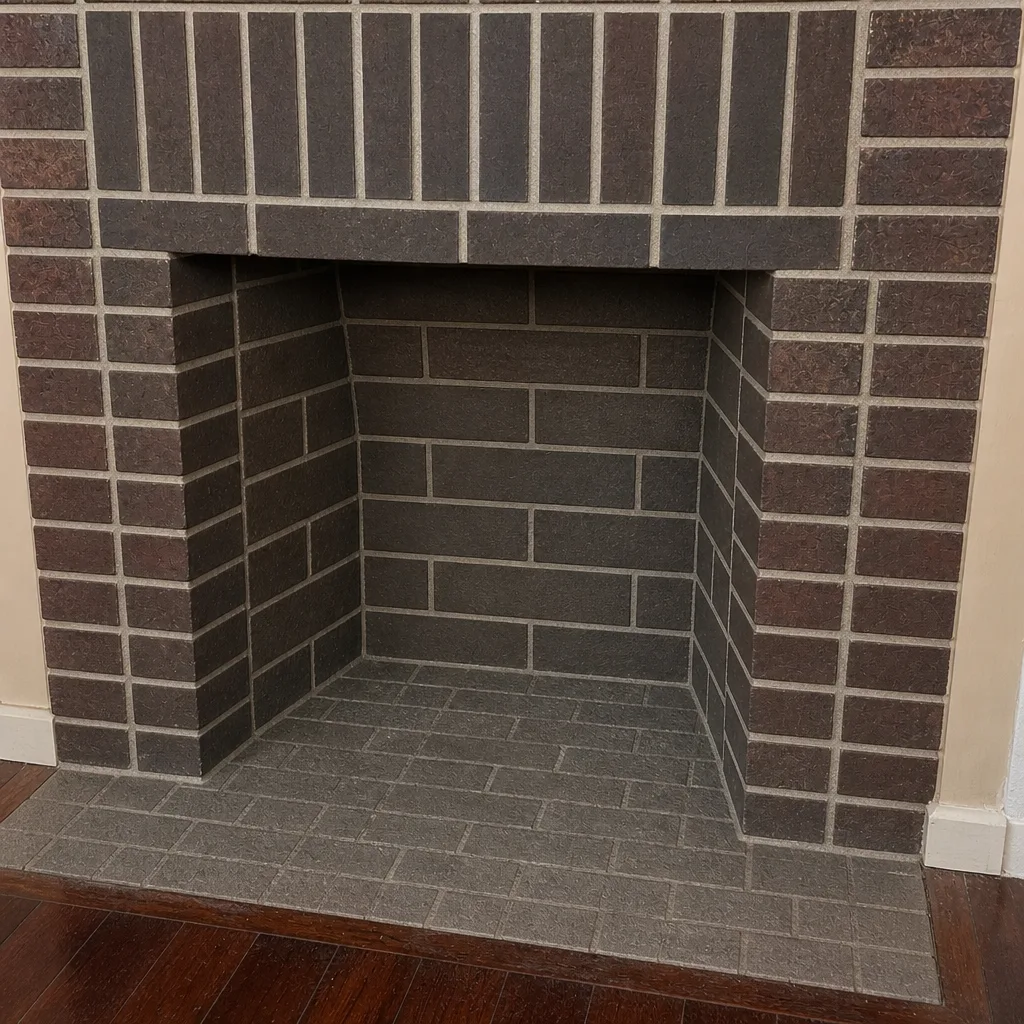 After
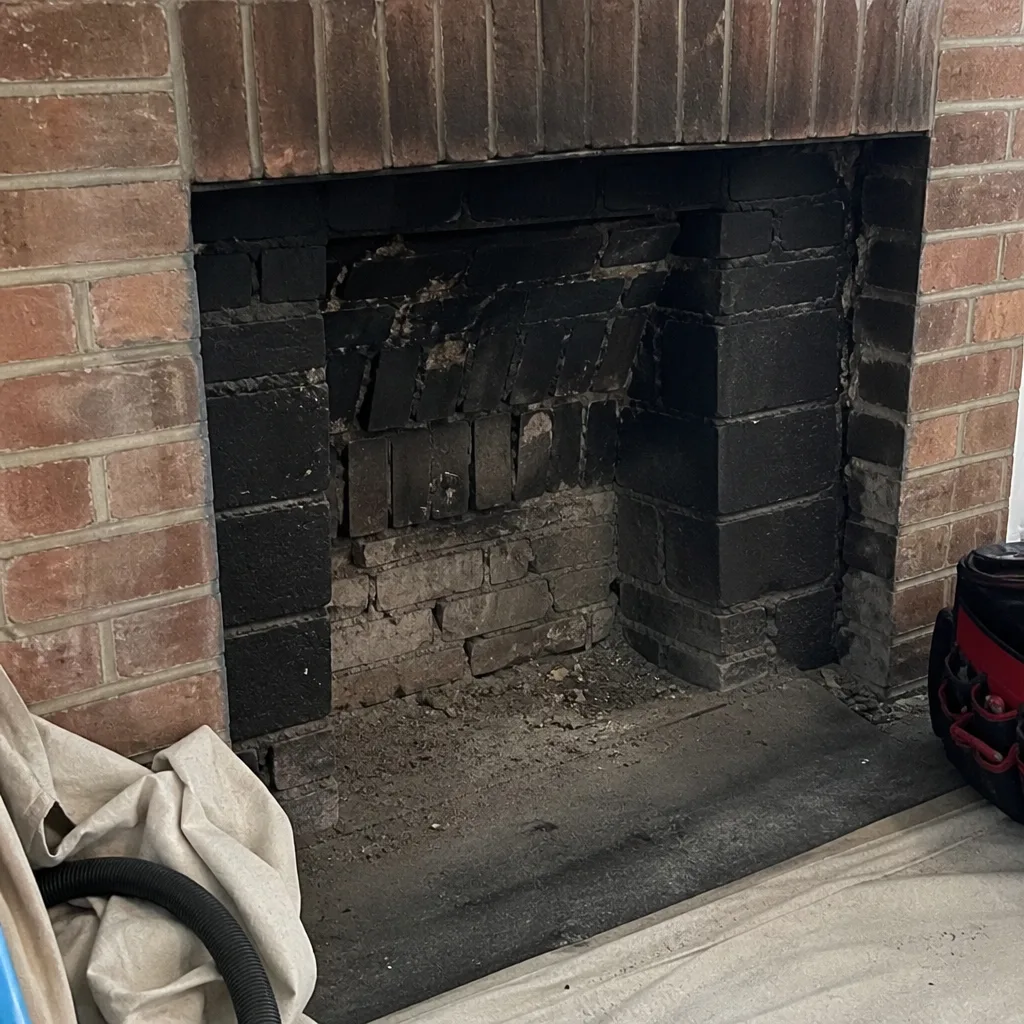 Before
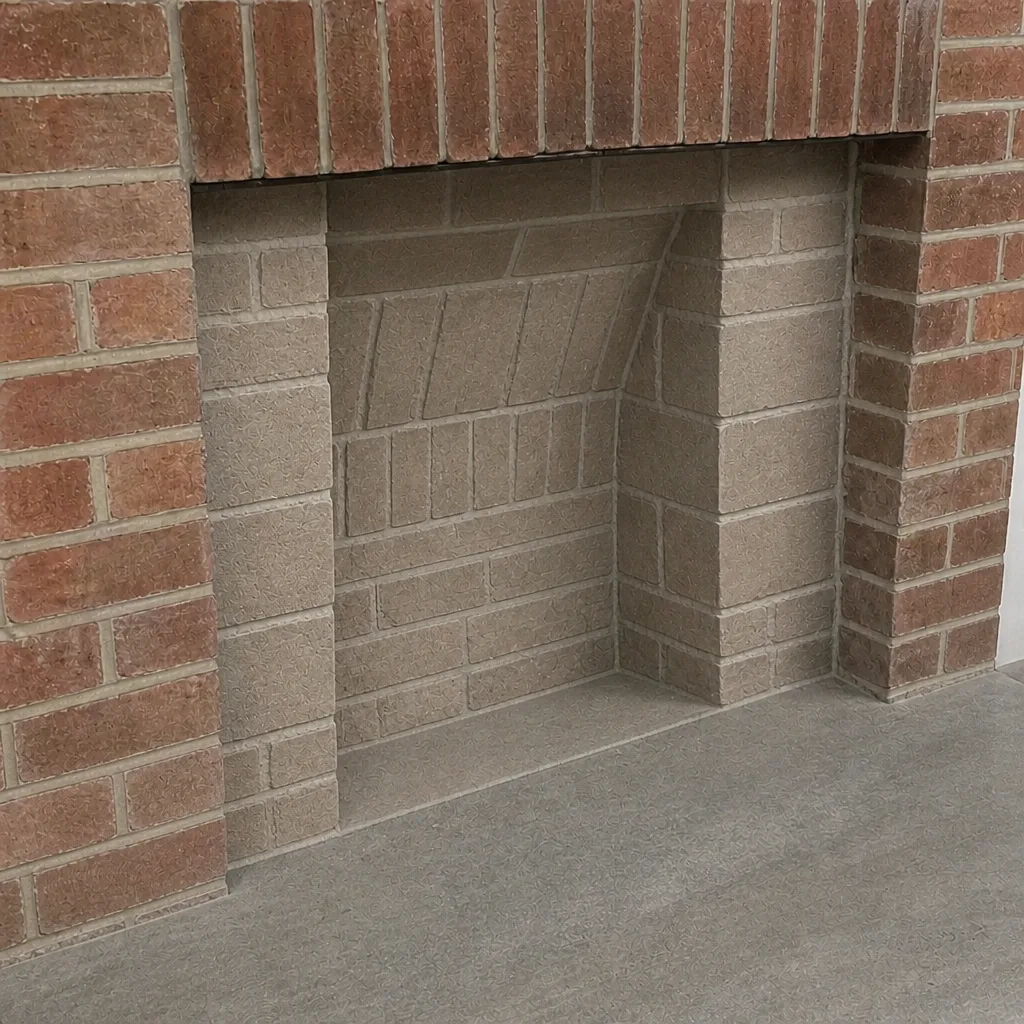 After
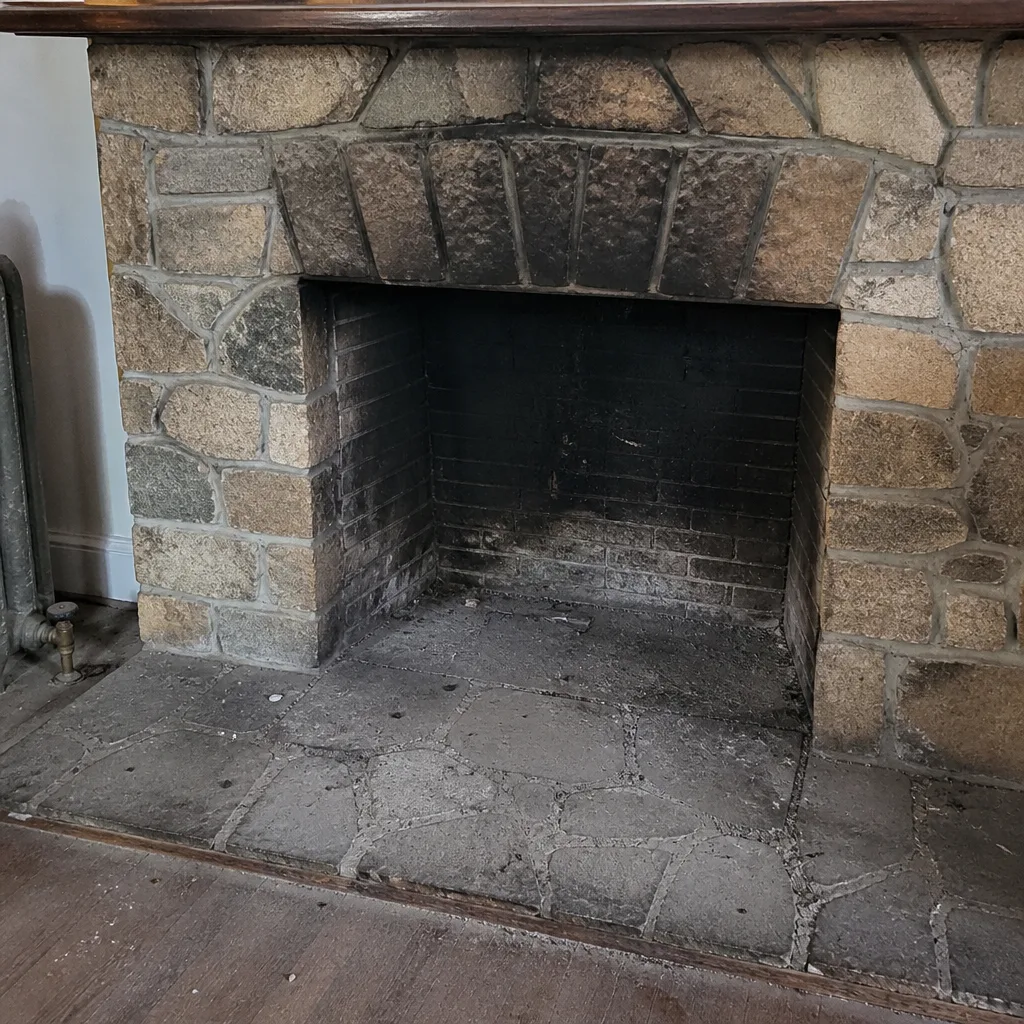 Before
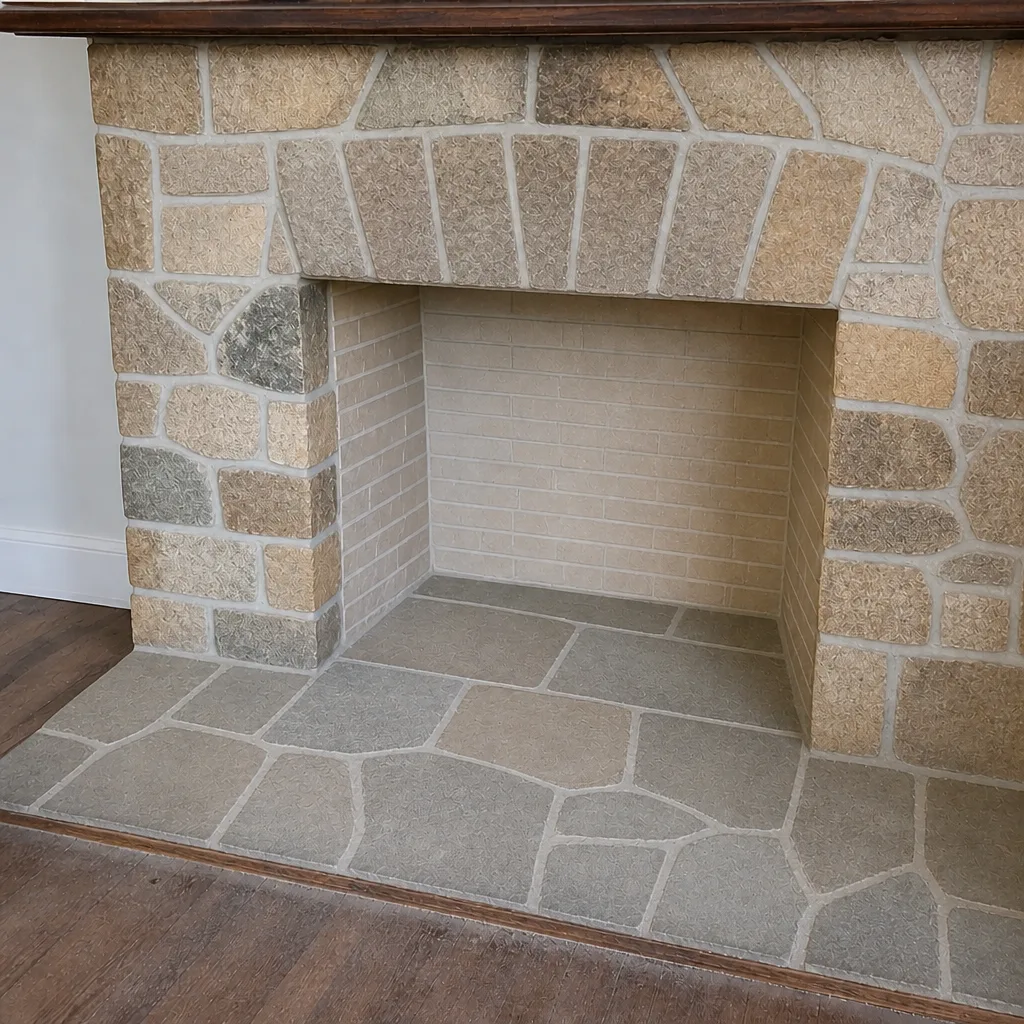 After
When to Call a Professional
Call a professional if any of the following is true: you smell gas anywhere near the chimney or a gas appliance, you see cracked or displaced firebrick, you find rust or heavy creosote inside the flue, smoke reverses into the room even with the airflow balanced, the crown is cracked or the cap is missing, or you simply don’t know when the chimney was last serviced. A chimney fire, even a suspected one, is an immediate reason to call. The same goes for real-estate transactions that require a formal inspection.
At Chimney Sweep Sunset Park, we’re a full-service chimney and fireplace specialist, not a cleaning-only crew. We work with professional brands including DuraFlex and HeatShield, so when an inspection finds a cracked flue or a compromised liner, the same team can plan and perform the fix. Our technicians have up to 11 years of experience and we diagnose before we quote. Chimney Sweep Sunset Park offers free estimates in Sunset Park. Call (866) 937-8201. We answer 24/7. Fast dispatch from 7am to 7pm, Sunday through Friday.
Frequently Asked Questions
A creosote smell with no fire burning is the most common sign we’re called about in Sunset Park, because the older rowhouses and converted multi-family buildings here have original flue tile that has often developed hairline cracks. When you can smell the fireplace while it’s cold, the flue is no longer sealed. That points to a liner problem, not just buildup, so it deserves an inspection. Call (866) 937-8201 for a free estimate.
Pricing is set per job by a written estimate after an inspection, so it reflects the actual condition of your chimney rather than a flat rate. Two chimneys on the same block can differ significantly based on creosote level, flue size and whether a camera inspection is needed. The estimate is free and the price doesn’t change after the work is booked. Call (866) 937-8201 for an exact quote.
You need a new liner only when the flue is actually compromised: cracked tile, glazed creosote that has damaged the flue surface, or a liner that wasn’t there to begin with. The way to know is a camera inspection you can see for yourself, and we’re happy to walk you through the footage. If the flue is intact, we say so and book a sweep instead. A resurfacing system like HeatShield is often the right fix for a compromised tile flue, and a full DuraFlex liner is the right fix for a system that needs replacement. Call (866) 937-8201 for a free estimate.
Once a year is the general standard for a fireplace that’s used regularly, plus an annual inspection whether or not you burn that year. In Sunset Park’s older and tighter housing, an annual inspection is worth keeping even in a light-burning year, because water intrusion and draft problems show up on inspection before they show up as smoke. Call (866) 937-8201 to get on the schedule before burning season.
Creosote keeps building, the flue gets narrower, and draft gets worse. Eventually the residue can ignite as a chimney fire, and the liner that was merely dirty becomes damaged. The other risk is carbon monoxide: a blocked or cracked flue can let combustion gases into the living space, and carbon monoxide has no smell, so a draft problem is a safety problem. Skipping a sweep doesn’t cause a problem to appear all at once; it lets a small one get bigger. Call (866) 937-8201 for a free estimate.
Yes, if nothing on the stop-today list applies, waiting until fall is fine, but book early rather than late. The first cold week of the season is the worst time to need an appointment, and a summer or early-fall sweep leaves you time to address any repair the inspection turns up. If you notice any of the warning signs described above before then, don’t wait. Call (866) 937-8201 for a free estimate.
The Bottom Line
Chimney problems almost always announce themselves before they fail, and the signs live in three places: what you smell, what you see inside the firebox, and what you can spot from the sidewalk. The strongest signals are a creosote smell with no fire burning, smoke that reverses into the room on every fire, cracked or spalling firebrick, rust or efflorescence, and a broken cap or cracked crown. Some of these mean stop using the fireplace today; others can wait for the next scheduled sweep. The safe move is to know which is which, and to book a sweep before burning season rather than after. In Sunset Park, we’ve watched enough of these symptoms turn into structural repairs to know that a quick inspection is almost always cheaper than the alternative.
Call (866) 937-8201. We answer 24/7. Fast dispatch from 7am to 7pm, Sunday through Friday.
Written by the team at Chimney Sweep Sunset Park.