
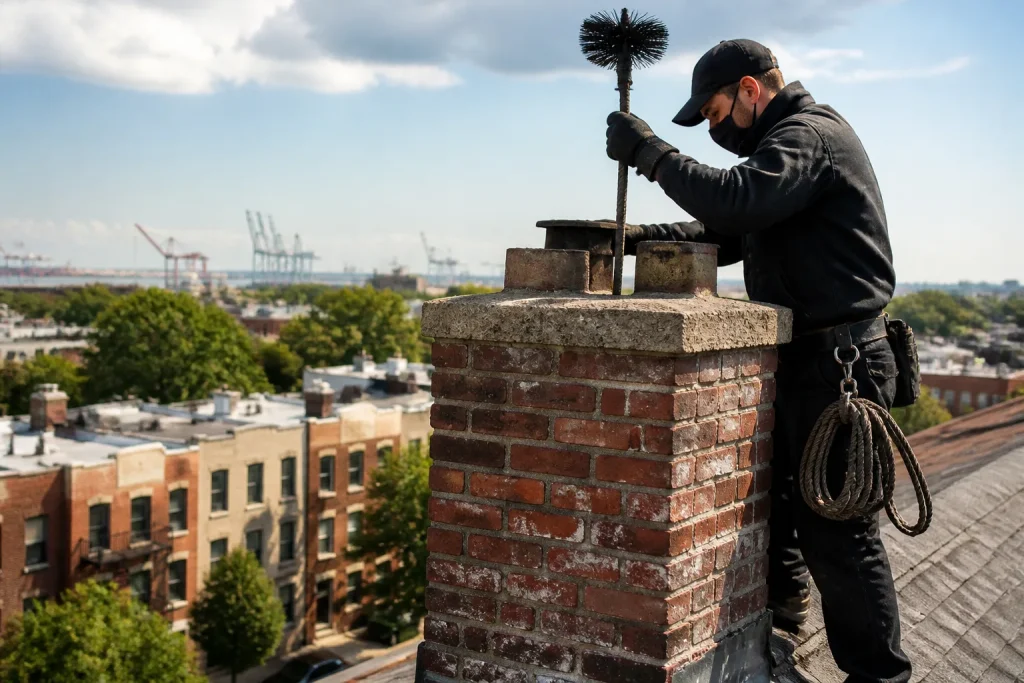
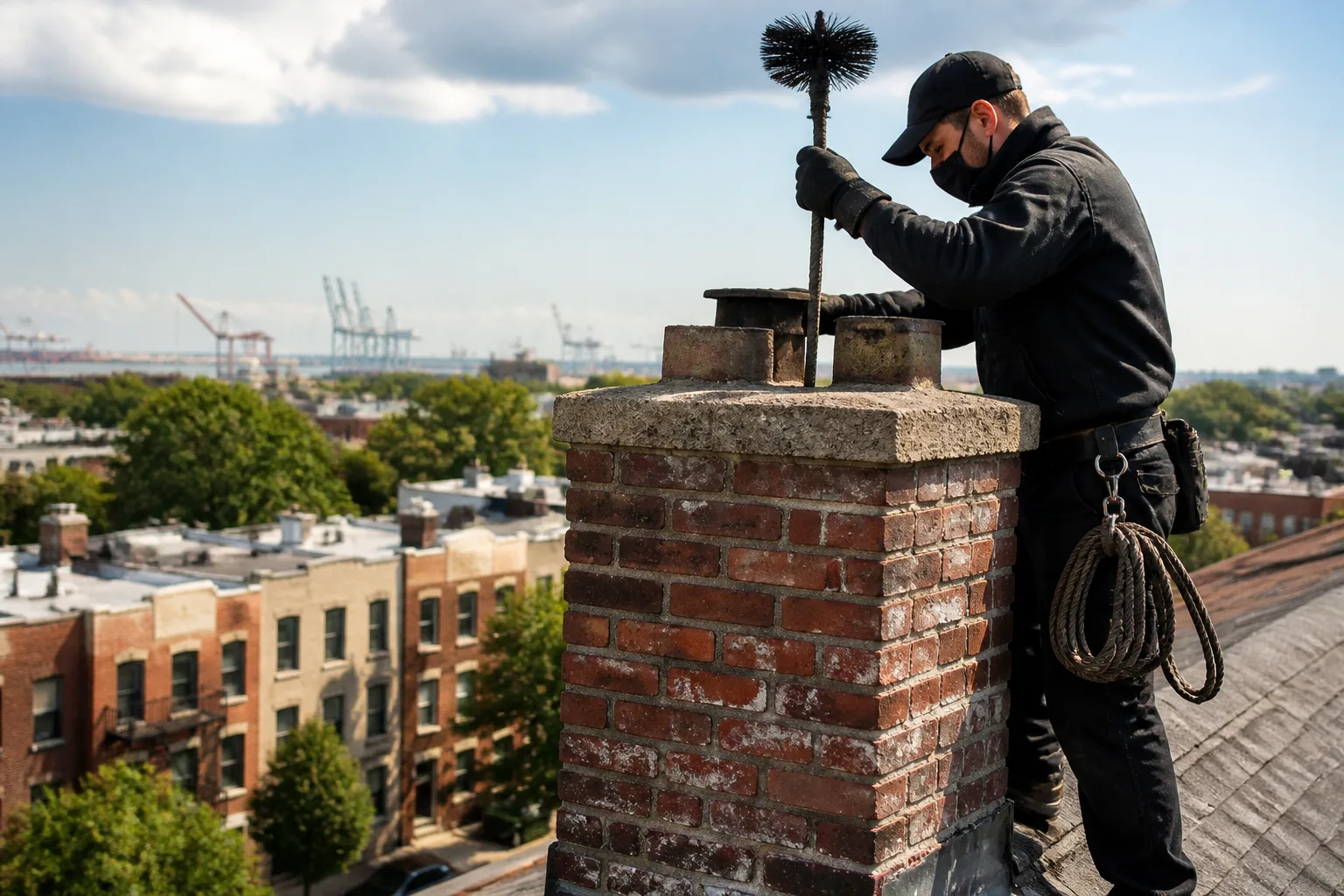
Top Signs You Need Chimney Cleaning Service – Don’t Ignore These
A thin black line of soot around your fireplace damper isn’t cosmetic. It’s a pressure signature, and it tells you the flue is either blocked, undersized, or coated with Stage 2 creosote, usually long before any smoke backs into the room. Most homeowners in Sunset Park wait for the obvious signs, like visible smoke or a smell that won’t quit. By then the flue has been running wrong for a season. Here are the earlier indicators worth knowing.
Key Takeaways
- A soot ring at the damper is a pressure signal, not a stain to wipe away.
- Creosote has three stages, and the difference between them decides whether you schedule a cleaning or stop using the fireplace.
- Oil-converted chimneys in Sunset Park’s older homes glaze faster than gas-only flues.
- Raccoons, chimney swifts, and starlings each leave behind different debris, which changes how a flue gets cleaned.
- Some signs mean “book a sweep soon.” Others mean “don’t light a fire until a technician looks at this.”
Why the Damper Soot Ring Matters
When combustion gases can’t move up and out, pressure pushes a little of that residue backward through the damper opening. A clean, well-drafted flue doesn’t do that with any regularity. If you’re seeing fresh soot build up between fires, the flue is telling you something.
The usual causes are consistent. A blockage from nesting or debris narrows the passage. A flue sized for a different appliance than the one now connected to it runs undersized from day one. Stage 2 creosote, which we’ll get to, coats the interior and shrinks the opening. Any of those three shows up first at the damper, because that’s the closest point in the system to the firebox.
What makes this specific to Sunset Park’s housing stock is age. Many homes here were built with oil heat and converted to gas or wood later, and those conversions rarely came with a properly resized liner. A pre-war terra cotta flue lined for oil doesn’t draft the same way when a gas insert or a wood-burning setup drops in. We see the soot ring most often on these converted systems.
What to do about it: wipe the soot and watch how fast it returns. Slow accumulation over a season is routine. Fast buildup after two or three fires is a signal to book a chimney sweep and get eyes on the flue before you burn again.
The Three Stages of Creosote, and What Each One Tells You
Creosote is the residue left behind by wood smoke, and it builds in three distinct stages. Knowing which one you’re looking at helps you decide between “schedule soon” and “stop burning now.”
- Stage 1: Flaky, soot-like, easy to brush away. It looks like grey-black powder and smells faintly of a cold campfire. This stage is routine and clears with a standard sweep.
- Stage 2: Crusty and flaking, or shiny and hard in patches. It looks like hardened tar drips, smells sharp and acrid when you get close, and clings to the flue walls. It doesn’t brush off with a light touch. Stage 2 is where the fire risk climbs sharply, because the fuel is now concentrated against the flue wall.
- Stage 3: Glazed, glassy, and difficult to remove by mechanical means alone. It looks like a hard caramelized shell. Stage 3 is a serious fire-hazard sign and typically points to a flue running too cool or undersized, which ties back to those converted systems we keep running into in Sunset Park.
Also worth knowing: pre-war terra cotta flue tiles often show hairline cracks visible from the firebox. Look up the flue with a flashlight. Vertical or spidering cracks in the tile mean the liner is compromised, and those cracks let heat and gases reach nearby combustible structure. A lined flue keeps the fire where it belongs; a cracked one doesn’t.
Oil-to-Gas Conversions and Glaze Buildup
Oil-converted chimneys are a familiar sight across Sunset Park, and they show warning signs that gas-only homes don’t. When a flue originally sized for an oil furnace takes on a different appliance, the draft characteristics change. If the new setup burns cooler than the flue expects, creosote condenses faster and moves toward glazing sooner.
What to look for on a converted system:
- Glossy or glassy patches in the flue, often visible with a flashlight from the firebox.
- Rust stains at the damper or flue collar, a sign of condensation inside the system.
- A smell that stays in the room even when the fireplace is cold.
- Soot dropping into the firebox after chimney activity, which points to a coated or partially blocked flue.
If you see glazing on a converted flue, treat it as a call-a-tech signal rather than a DIY project. Chemical and mechanical removal at that stage is a trained job, and a proper chimney repair review of the liner is worth having at the same time. Glazing often means the liner has taken damage underneath.
Brick Spalling at the Crown
Sunset Park’s brick chimneys take a beating from the freeze-thaw cycle. When a crown cracks and lets water in, the brick above the roofline absorbs it, then flakes and spalls outward. You’ll notice brick fragments in the gutter or piled at the base of the chimney. Spalling brick at the crown is a sign the structure itself needs attention, alongside the flue cleaning.
The fix isn’t just a sweep. A cracked crown needs a proper rebuild with a sturdy mortar mix and a well-formed overhang to shed water. We install crowns using professional-grade materials rather than patching over the damage, and we cap the flue while we’re up there. A cap keeps rain, birds, and nesting debris out and protects the flue between cleanings. That’s the whole point of chimney cap & crown work, and it’s a category we treat as preventive maintenance, not an upsell.
Left alone, spalling brick weakens the masonry around the flue and lets water reach the liner. Catch it at the crown stage and it’s a repair. Catch it a few winters later and it can be a rebuild.
Nesting and Animal Debris: Which Species Leaves What
Animal blockage is common in Sunset Park’s older homes, and the cleaning method depends on what moved in. Not every nest comes out the same way, so here’s the short field guide we use.
- Chimney swifts: Small birds that build twig nests glued to the flue wall with saliva. The nest is fragile but can block a flue, and it needs careful removal so you don’t damage the liner. Swifts are protected, and timing matters for when the nest can be cleared.
- Raccoons: The heavyweights. They leave behind droppings, fur, and torn nesting material that mat together. Raccoon droppings carry health risks, so removal needs protective handling and a full cleaning afterward, not just a bag-and-go.
- Starlings: Fast nesters that stuff flues with grass, twigs, and feathers. Their debris is dry and loose, but it also catches sparks. A starling nest near a hot flue is a genuine fire hazard.
A capped flue keeps all of them out. If you’re hearing scratching, chirping, or flapping in the chimney, don’t light a fire. Book a technician to clear the blockage and check the flue before the fireplace goes back into service. If you’d rather not poke around up there yourself, call (866) 937-8201.
The Sign Almost Nobody Mentions: Draft That Changed After a Neighbor’s Renovation
If your fireplace suddenly drafts poorly and the flue itself looks fine, look at the roofline next door. Sunset Park’s attached rowhouses sit close together, and a neighboring renovation that adds a story or a taller chimney can change the wind pattern over your own flue. A flue that drafted cleanly for years can start backtracking when a taller adjacent chimney creates turbulence around your cap.
In our experience, draft inconsistency after a neighbor’s height change is one of the most misdiagnosed problems in row-house neighborhoods. Homeowners clean the flue, still get a smoky fire, and assume the chimney itself is failing. Often it’s airflow, not soot.
A draft test, a proper cap installation, or a flue extension can fix it. Our technicians have up to 11 years of experience sorting out exactly this kind of problem, and we name the brands we install, like Olympia Chimney and DuraFlex, because the parts matter as much as the labor when a cap or liner change is needed.
When to Call a Pro
Some signs mean “book a sweep soon.” Others mean “don’t use this fireplace until a technician looks at it.” Here’s the split we give homeowners.
- Schedule a cleaning soon: soot returning at the damper, Stage 1 or light Stage 2 creosote, visible bird or starling nesting, spalling brick at the crown.
- Stop using the fireplace: Stage 3 glazing, hairline cracks in the flue tile, raccoon debris still in place, smoke backing into the room, draft inconsistency you can’t explain.
A cracked liner or a glazed flue is a safety matter, so it’s not a DIY job. The interior of a chimney is a confined, hard-to-inspect space, and liner work is best left to a trained technician.
Related services in Sunset Park: our team handles flue cleaning, inspection, liner repair, and cap and crown work from the firebox to the crown. From the firebox to the crown, everything in one visit.
The Bottom Line
Most chimney problems announce themselves long before smoke fills the room. The damper soot ring, the creosote stage, the glazed patches on a converted flue, and the spalling at the crown are all early signals worth reading correctly. If you’re in Sunset Park and need help, Chimney Sweep Sunset Park offers free estimates. Call (866) 937-8201. We answer 24/7. Fast dispatch from 7am to 7pm, Sunday through Friday. Our technicians have up to 11 years of experience, and we stock and install professional-grade parts from brands like DuraFlex and HeatShield, so a cleaning turns into the right fix the first time.
Frequently Asked Questions
Most fireplaces need a sweep about once a year if you burn regularly, and sooner if you see soot returning at the damper or creosote building past Stage 1. For a converted oil-to-gas flue, get it checked before each burning season, since those systems glaze faster. Call (866) 937-8201 for a free estimate.
Yes, if the flue shows any of the early signs above. Light use doesn’t protect a converted flue from glazing, and a blocked flue from bird nesting can appear between seasons. A quick check tells you where you stand, and many flues are fine for another season once cleared. Call (866) 937-8201 to book an inspection.
Creosote keeps building and moves toward Stage 3 glazing, which raises the risk of a chimney fire. A cracked liner or blockage can also push carbon monoxide back into the room instead of up and out. If you’re seeing glazing or flue-tile cracks, stop using the fireplace until a technician looks at it. Call (866) 937-8201 for a free estimate.
You can handle light Stage 1 soot with a standard brush, but glazed creosote, cracked tiles, and animal debris need a trained technician, and the confined flue makes DIY work risky. A sweep booked with us also comes with an inspection, so you get a straight read on the whole system. Call (866) 937-8201 for details.
Written by the team at Chimney Sweep Sunset Park.
Need Chimney Cleaning Help?
Call Chimney Sweep Sunset Park - the local pro we connect you with is licensed and insured, here with fast help in Sunset Park.
(866) 937-8201