
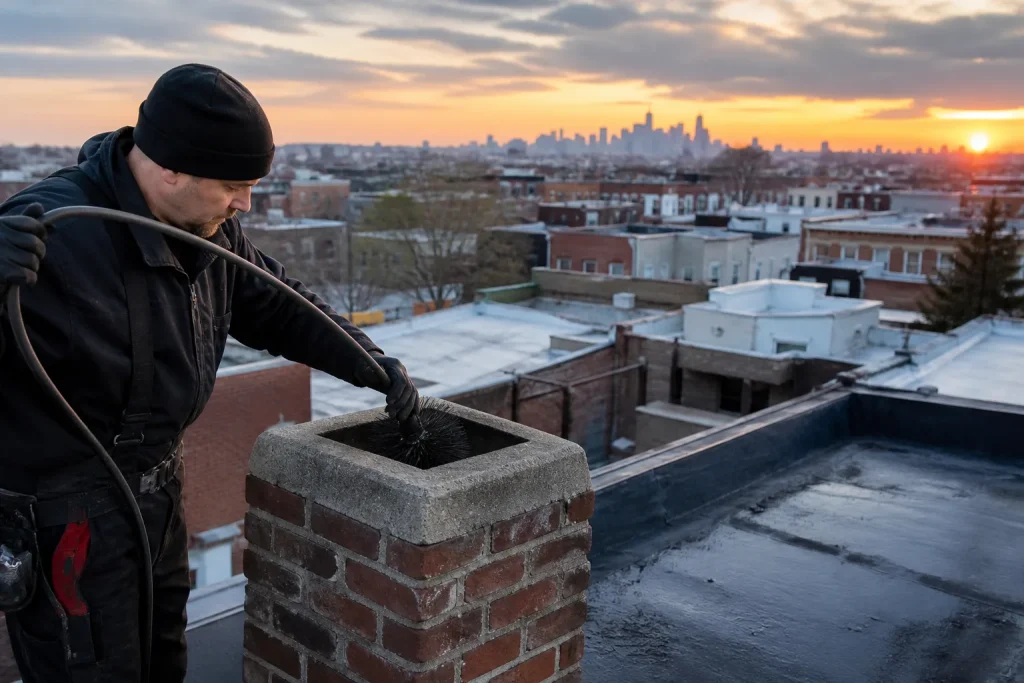
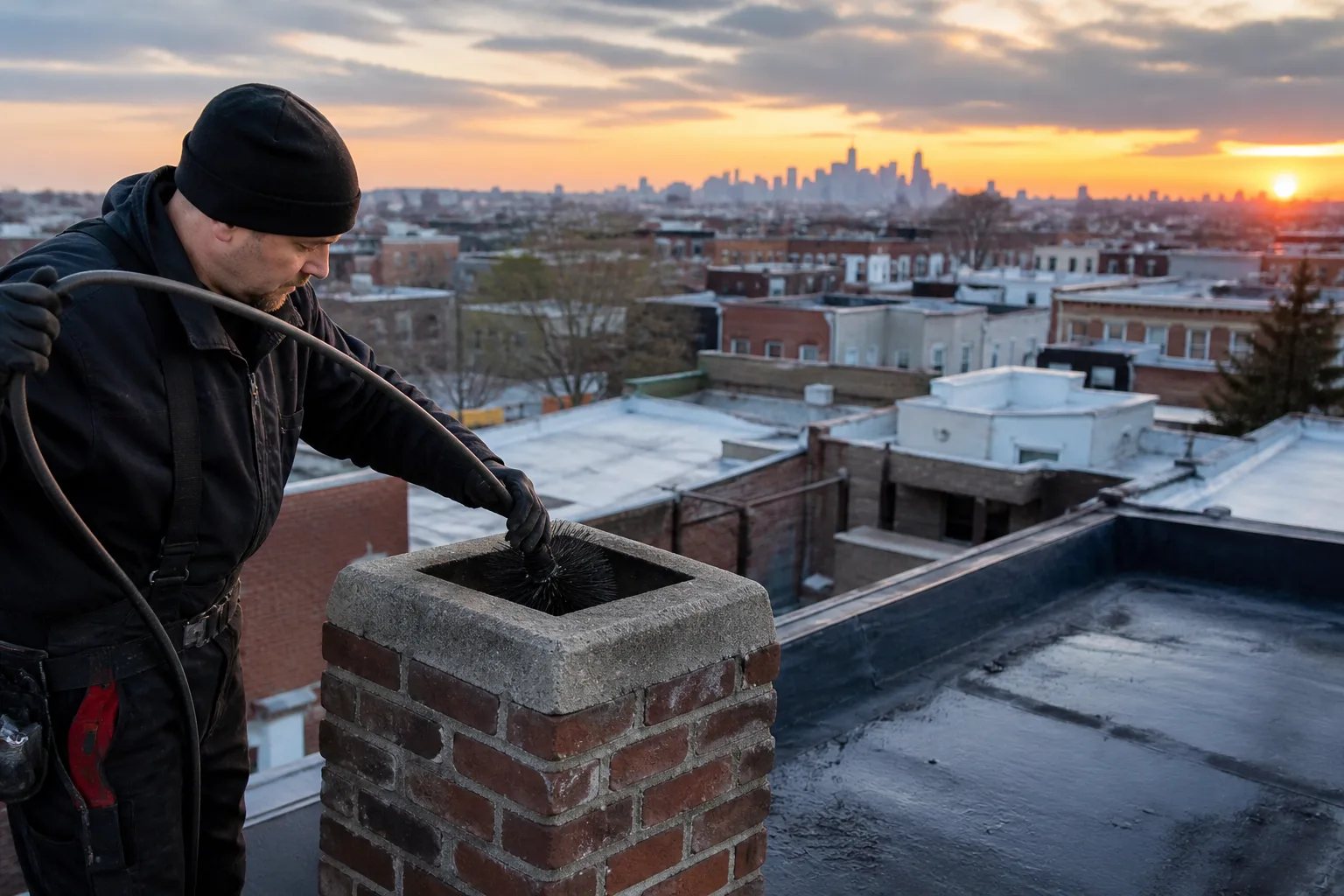
Emergency Chimney Sweep Near Me: What Sunset Park Homeowners Should Do First
Most people who search for an emergency chimney sweep in Sunset Park are looking at a problem right now: smoke curling back into the room, a roaring sound in the flue, or soot falling onto the hearth. Here’s the honest answer up front. Your first move is not to call a sweep. It’s to contain the event: shut the damper, stop feeding the fire, get people out if there’s any doubt, and call 911 before anyone else if you see flames at the top of the chimney or smell smoke inside the walls. A chimney fire can move from the flue into the wood framing of a Brooklyn rowhouse fast, and the next few minutes matter more than a truck’s arrival time. If you’d rather not sort this out alone, call (866) 937-8201 and we’ll walk you through it.
What Should You Do in the First 10 Minutes of a Chimney Emergency?
Work through these steps in order. Don’t skip ahead, even if the situation looks calm.
- Stop feeding the fire. Don’t add wood, don’t poke at it, and don’t throw water on it. Water on a hot firebox or flue can crack masonry or a clay liner.
- Close the glass doors, then the damper. Shutting the damper cuts the air supply and slows the fire. If the fireplace has glass doors, close them first so smoke doesn’t roll into the room.
- Get everyone out if you see or hear signs of a chimney fire. That means a loud roaring or rumbling, flames or sparks at the crown, or black smoke pouring from the top. Leave the house, then call 911 from outside.
- Call 911 for any fire you can’t see and control in the firebox. A fire inside the chimney is a structural emergency. FDNY would rather respond to smoke in a wall than arrive after the framing is involved.
- If it’s smoke only and no fire signs, open a window near the fireplace. A little cross-ventilation can restore draft on a windy night. Don’t relight anything.
- Call a sweep once the immediate danger is gone. Every event needs an inspection before the fireplace is used again.
We answer the phone around the clock, and we dispatch technicians from 7am to 7pm, Sunday through Friday. If you call outside those hours, we’ll book you into the next opening rather than leave you guessing.
Chimney Fire, Blockage, or Downdraft: How Do You Tell the Difference?
Not every scary chimney event is an emergency, and triaging correctly saves you panic, money, and a needless 911 call. Here are the three situations Sunset Park homeowners run into most.
- Chimney fire (structural emergency). Signs: a deep roaring sound, a hot chimney breast, flames or dense smoke at the top, or a smell of burning creosote. Call 911. Then get a Level 2 inspection.
- Blockage or backdraft (operational problem). Signs: smoke spilling steadily into the room, a weak or lazy fire, soot flakes on the hearth. Common causes are a nest, a leaf pile, or heavy creosote restricting the flue. Not an immediate 911 call, but don’t use the fireplace until it’s cleared.
- Wind downdraft (not an emergency). Signs: a puff of smoke when you first light the fire, or smoke pushed back on a gusty day, that clears once the flue warms up. In a dense neighborhood of attached rowhouses, a taller neighboring roof or a nearby chimney can steal your draft on certain wind directions. This is a design and airflow issue, not a fire risk, but it’s worth diagnosing.
Getting the category right is the whole game. An operational problem that gets treated as a fire emergency wastes a fire call. A chimney fire treated as a puff of smoke is the situation we’d all rather avoid.
What Does a Real Emergency Sweep Dispatch Look Like?
Plenty of companies advertise “emergency chimney sweep near me” and then book you for a routine appointment the following week. Here’s how to spot a genuine emergency response from a standard booking with a dramatic label.
- A real emergency dispatch asks triage questions first. What do you see at the top? Is there smoke in the room? Are the walls hot? A technician who understands a chimney fire is a fire will get you off the phone and toward 911 if needed.
- A real dispatch explains what to do while you wait. Close the damper, don’t relight, keep people out of the room. That guidance is half the value.
- A real dispatch brings the right capability. You need someone who can sweep, inspect, and repair: not just clean. If the event cracked a liner or damaged the crown, the same crew that diagnoses it should be able to fix it. We install DuraFlex liners and apply HeatShield flue resurfacing, which means a post-event problem gets addressed on the spot instead of handed off to a subcontractor.
- A real dispatch inspects, not just cleans. An emergency visit without a proper inspection afterward leaves you guessing.
One note on that last point: our technicians have up to 11 years of experience, and we still don’t diagnose a post-event chimney from the curb. Camera work and a physical look at the flue are how we call it, every time.
Do You
Need a Level 2 Inspection After a Chimney Fire?
Yes. After any suspected flue fire, NFPA 211 calls for a Level 2 inspection before the appliance is used again. It’s not optional, and it’s not something a basic sweep covers. A Level 2 inspection is more thorough than the routine annual visit: it looks at the entire flue with a camera, checks the firebox, damper, smoke chamber, and crown, and inspects accessible portions of the chimney for damage the fire may have caused. In a Sunset Park rowhouse, that includes checking where the chimney passes through the framing, since fire can travel into wood structure that no one can see from the living room.
Here’s what a Level 2 inspection does for you practically. It produces a written report with photos, which is exactly what an insurance adjuster wants after a chimney fire claim. The report tells you whether the liner is still serviceable or has cracked, whether the crown needs repair, and whether the firebox masonry is sound. Without that, you’re relying on an adjuster’s guess. We photograph the flue with a camera and walk you through what we found. If the liner is compromised, we can quote a HeatShield resurfacing or a full DuraFlex liner replacement from the same inspection, based on what the camera shows, not a sales pitch. Should the damage extend beyond the flue, a proper chimney repair scope gets written into the same report so nothing gets left for a second contractor.
When Do You Need FDNY Clearance Before Relighting?
If the fire department responded to a chimney fire at your home, don’t relight the fireplace until you have a qualified inspection and, where required, a clearance from FDNY. FDNY protocol after a chimney fire generally includes confirming the fire is out and the structure is safe, and in many cases the department will require that a qualified chimney professional inspect the flue before the fireplace comes back into service. The exact requirement depends on the incident, so follow what the responding company tells you. What we can say with confidence: never relight a fire in a chimney that’s had a fire, a blockage event, or any visible damage until it’s been inspected. The chimney cap & crown are part of that check too, since a cracked crown lets water in and a missing cap lets debris down.
When Should You Call a Pro?
Call a pro for anything you can’t see into and verify. If a fire happened, if soot is falling, if smoke was coming into the room, or if you’re not sure what you’re looking at, get a camera down the flue before you use the fireplace again. A routine chimney sweep clears the creosote, but the inspection is what tells you whether the chimney is safe to use. We inspect first, quote second, and we’ll tell you plainly when work can wait. If you’re in Sunset Park, our team handles everything from the firebox to the crown, and we’re the ones who show you the photo evidence for any repair we recommend.
The Bottom Line
Emergencies in Sunset Park come down to the first ten minutes. Stop feeding the fire, shut the damper, get out and call 911 if there’s any sign of a real chimney fire, and get an inspection before you relight. Most “emergencies” turn out to be blockage or downdraft, which is fixable. A real chimney fire needs a proper Level 2 inspection and documented findings for your insurance. We’ve seen what happens when a homeowner relights too soon, and it’s not a savings.
If you’re in Sunset Park and need help, Chimney Sweep Sunset Park offers free estimates. Call (866) 937-8201. We answer 24/7. Fast dispatch from 7am to 7pm, Sunday through Friday. You can also start from our main Chimney Sweep Sunset Park page if you’d rather explore services first.
Frequently Asked Questions
A chimney sweep in Sunset Park is priced per job based on the written estimate, not a flat rate across every house. A routine sweep costs less than a post-event Level 2 inspection plus repair, and the price is set once we’ve seen the flue, so you know what you’re paying before any work starts. Call (866) 937-8201 for a free estimate.
Not until a qualified professional has inspected the flue. After any suspected flue fire, NFPA 211 calls for a Level 2 inspection before the appliance is used again. If FDNY responded to the incident, follow their clearance guidance as well. Call us to get that inspection scheduled.
Smoke spillage without fire signs is usually a blockage or downdraft, not a structural emergency. Open a window for draft and don’t relight the fire until it’s checked. A camera inspection tells you which it is. Call (866) 937-8201 to book an inspection.
Only if the inspection shows the old liner is cracked or otherwise compromised. A camera inspection and the resulting photos are what decide it: not a guess or a sales pitch. When a replacement is needed, we install DuraFlex liners and can apply HeatShield resurfacing where the liner can be saved. Call for a free estimate.
Written by the team at Chimney Sweep Sunset Park.
Need Chimney Cleaning Help?
Call Chimney Sweep Sunset Park - the local pro we connect you with is licensed and insured, here with fast help in Sunset Park.
(866) 937-8201