
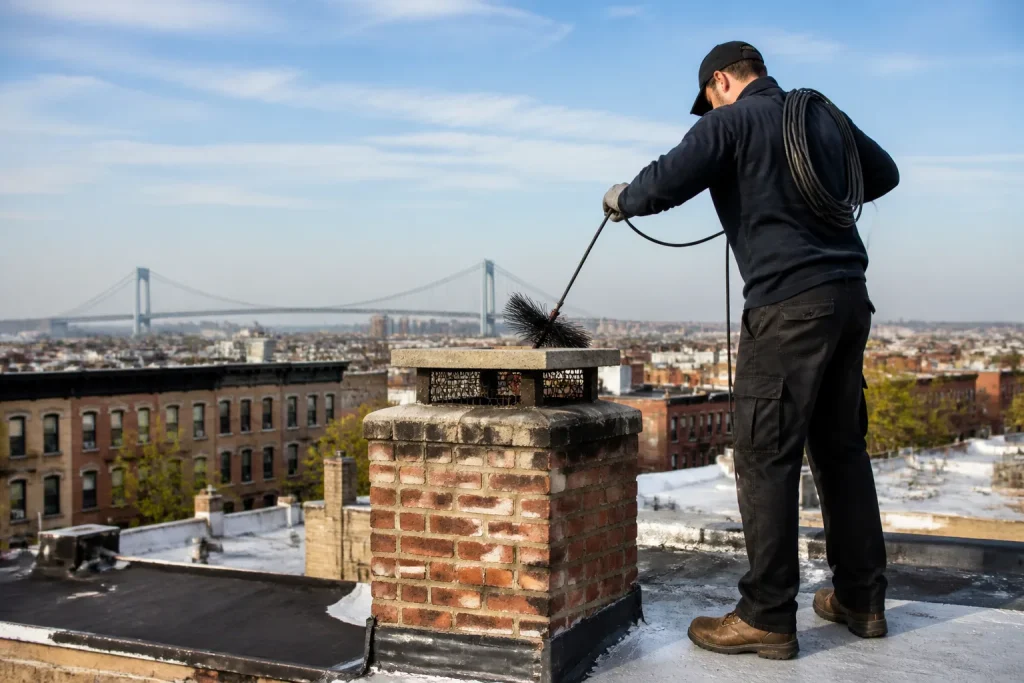
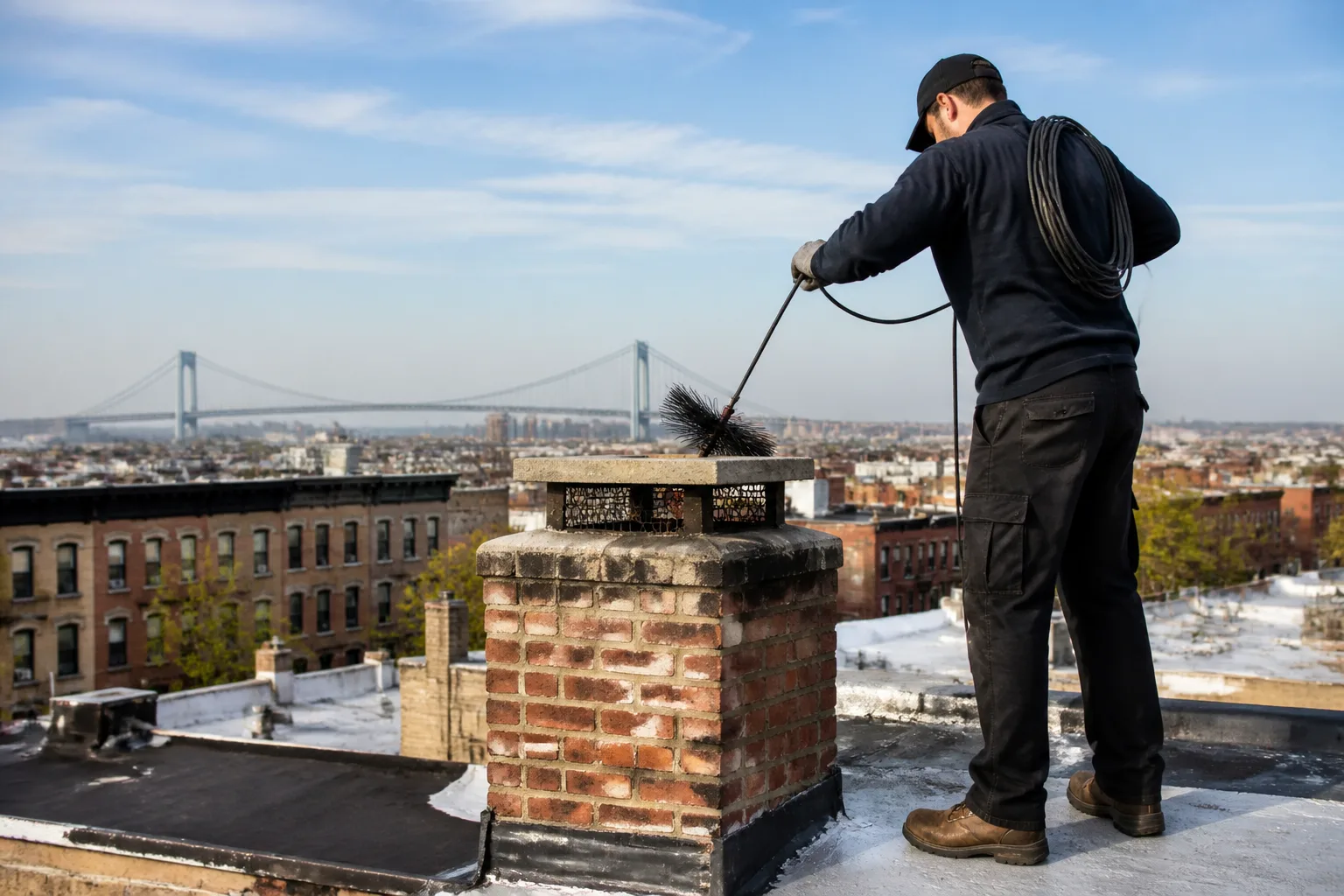
Chimney Sweep: Repair or Replace? How Sunset Park Homeowners Decide
Most people assume the answer depends on how old the chimney is. It doesn’t. A swept and relined 90-year-old Sunset Park chimney often outperforms a poorly installed replacement liner in a 1990s system, because once you know which component actually failed, age stops mattering. The real question is narrower: what broke, what is it made of, and is the failure isolated or a symptom? If you’d rather have a specialist look before you make that call, call (866) 937-8201. We answer 24/7. Fast dispatch from 7am to 7pm, Sunday through Friday.
Key Takeaways
- Repair or replace is decided component by component, not by the chimney’s age.
- Sunset Park’s pre-1960 brick rowhouses fail in predictable places: terra cotta liners worn by decades of oil heat, mortar joints opened by freeze-thaw, and offset flues from past building changes.
- HeatShield resurfacing and stainless liner systems have very different lifespans, so which one you pick depends on the condition found.
- Ask any contractor two questions before agreeing to replacement: what failed, and what evidence do you have?
Why “repair or replace” depends on the component, not the chimney’s age
Think of a chimney as five parts that fail at different rates: the flue liner, the crown, the firebox brick, the damper, and the cap. A chimney can be 70 years old and need only a new cap. It can be 30 years old and need a full reline. In our experience across Sunset Park, the decision almost never comes down to one verdict for the whole structure. It comes down to a handful of small verdicts, each with its own cost and lifespan.
That matters because a replacement quote that covers everything at once is usually either unnecessary or hiding which part was really the problem. A good inspection tells you which component has failed, what material it is, and whether that failure is isolated or a sign of a larger issue. That’s why we diagnose before we quote, with camera evidence you can see yourself, before any work is recommended.
The useful way to use the matrix below is to read it against your own inspection report. If a contractor is recommending replacement, you should be able to point to the exact row on this list that failed.
The component-by-component decision matrix for Sunset Park chimneys
Here is how the repair-or-replace call actually breaks down by part. Each one has a different answer, and each one has a different lifespan after the fix.
- Flue liner (the big one). Reline when the terra cotta tiles are cracked, spalled, or have gaps at the joints but the surrounding masonry is sound. A stainless system using DuraFlex handles a full flexible liner replacement, and HeatShield resurfacing restores a compromised liner from the inside without pulling the original tiles. Replace the whole system only when the flue has separated or the masonry around it is failing. HeatShield resurfacing typically holds for the long haul under normal use; a stainless liner system is the choice when you need a new structural flue.
- Crown. Patch when the crack is hairline and the crown still slopes and drains correctly. A damaged, crumbling, or flat crown needs a full pour. Patching a failing crown by hand delays the same conversation by about three years. We work with CrownSeal for crown repair, because a compromised crown lets water into everything below it.
- Firebox brick. Tuckpoint when the joints are eroded but the bricks themselves are intact. Rebuild the firebox when the bricks are spalling or the box has shifted. Refractory mortar matters here; ordinary mortar doesn’t survive firebox heat.
- Damper. A rusty throat damper can usually be replaced in place. If the damper is beyond saving and you want top-mount convenience, that’s a different job with a different part.
- Cap. A direct swap. If the cap is missing, rusted out, or the wrong size for the flue, this is one of the fastest fixes on this list. A proper chimney cap & crown job also keeps rain, birds, and debris out, which is what protects everything else.
Which leads to the honest version of the rule: some failures are isolated (the cap), and some are systemic (a liner with gaps at every joint). Isolated failures get repaired. Systemic ones get called out as what they are.
What actually fails in Sunset Park’s pre-war rowhouses
The housing stock here is specific, and so is the failure pattern. Pre-1960 brick rowhouses around Sunset Park tend to show three things over and over:
- Terra cotta liners worn down by decades of oil heat. Before these homes converted to gas, oil-burning furnaces produced flue gases that attacked the clay tiles over time, causing spalling and hairline cracks. The liner that was fine in 1965 is often thin and broken today.
- Mortar joints opened by freeze-thaw on exposed Brooklyn rooftops. The chimney stack is the highest point on the roofline and takes the most weather. Water gets into a hairline crack, freezes, expands, and widens it, season after season. The crown and the upper brickwork suffer first.
- Offset flue sections from past building modifications. Decades of additions, boiler upgrades, and remodeling have pushed some flues into offset paths that restrict draft and create weak points. An offset flue complicates a reline, because a flexible liner has to make the bend without kinking.
When we inspect a Sunset Park chimney, those three patterns set the expectation. The report tells you which one is present and how far it’s progressed. What it doesn’t do is assume that every pre-war chimney needs a new liner; plenty of them need a crown and a cap, and nothing more.
When a repair is the right investment, and when it just delays the conversation
A repair is a sound investment when the failure is isolated, the surrounding material is sound, and the fix restores the original function rather than masking it. A repair delays the inevitable when it covers a problem without fixing the cause. Patching a crown that still has no slope, or sealing a liner without addressing the missing cap that let water in, is the second kind.
The lifespans of the parts matter here. HeatShield resurfacing is a repair-grade service that extends a compromised liner’s working life rather than replacing it outright, and it’s the right call when the tiles are degrading but still in place. A stainless liner system is the right call when the original flue is too far gone to resurface. Refractory mortar in a firebox rebuild outlasts a tuck-and-hope patch. The point is that each option has been designed for a specific condition, and matching the condition to the option is the whole decision.
If you’ve been told you need thousands in liner or masonry work and can’t verify it, say so. Nothing should be recommended here without camera evidence you can look at. And where a problem can safely wait, the honest answer is to say so. We can tell you when it can.
If any of this points toward structural work, our chimney repair page covers what a repair visit involves.
The NYC permit question, and why it affects whether you can sell
New York City is particular about permits, and the permit threshold on chimney work affects more than your wallet; it shows up in a real-estate transaction. Some chimney repairs are routine maintenance and don’t require a permit. Others, such as structural work on the chimney or work that alters the flue system, generally do. The exact line depends on the scope, so the right move is to ask the licensed professional doing the work, and to ask the city’s building department when you’re buying or selling a home and want to know the status of any past work.
Why it matters for a Sunset Park rowhouse: if a previous owner relined the chimney or rebuilt a firebox without a permit, that can surface during a sale inspection. The clean path is to have the work permitted where required and documented afterward, so the paper trail exists before you need it. A proper chimney sweep and inspection along with a written report gives you exactly that: a dated record of what was found and what was fixed.
We can’t tell you from here which permits your specific job needs. We can tell you to ask, and we can tell you to get the answer in writing before work starts.
The two questions that separate specialists from upsellers
Before you agree to replacement, ask any contractor making that recommendation two questions. Their answers tell you everything.
- “What specifically failed, and what’s your evidence?” A specialist points to a cracked flue tile, a spalled joint, a crown with no slope, or a damaged firebox and shows you the camera footage. An upseller says “it’s old” and moves on.
- “What liner material and gauge are you proposing?” A specialist names the system (DuraFlex and Olympia Chimney are among the professional-tier brands we install), the material, and the gauge, because the materials matter as much as the labor. A vague answer about “a top-quality liner” means there is no answer.
Add a third if the work is structural: “Will this work need a permit, and who’s documenting it?” A contractor who can answer all three without hesitation is the one to keep. If a quote doesn’t survive these questions, the price doesn’t matter.
When to call a pro (and when you really shouldn’t)
The chimney is not a DIY space. Creosote buildup and blocked flues are the fuel for a chimney fire, carbon monoxide is a real risk when a blocked or cracked flue can’t vent properly, and the top of a pre-war rowhouse is a dangerous place to be. Those are the reasons to have a trained professional, not a reason to be sold a new liner. Our technicians have up to 11 years of experience, and they’re the ones up on the roof, not you.
Call a professional if you haven’t had a sweep and inspection in a year, if you smell smoke in the house when the fireplace is running, if the firebox brick looks crumbled, or if you’ve moved into a Sunset Park rowhouse and don’t know the chimney’s history. A clean flue is the starting point; a safe, structurally sound chimney is the goal.
If what you need is a routine sweep and inspection, that’s the right place to start. Start with a Chimney Sweep Sunset Park visit and you’ll get a real diagnosis before any talk of replacement. The repair-or-replace conversation is a lot shorter when you’ve seen the evidence first.
Related services in Sunset Park: chimney inspection, chimney cap & crown work, liner repair and replacement, and fireplace repair.
The Bottom Line
The decision turns on which component failed, what material it’s made of, and whether the failure is isolated or systemic, not on how many birthdays the chimney has had. In Sunset Park, that usually means a close look at the terra cotta liner, the crown, and the mortar joints, because the pre-war rowhouses fail in those predictable spots. Repair when the failure is isolated and the surrounding material is sound. Replace when it isn’t, and make sure the answer is backed by camera evidence you can see.
If you’re in Sunset Park and need help, Chimney Sweep Sunset Park offers free estimates. Call (866) 937-8201. We answer 24/7. Fast dispatch from 7am to 7pm, Sunday through Friday. The estimate is free, and the price you get is set per job by the written estimate, so you’ll know the number before anyone starts.
Frequently Asked Questions
A chimney sweep in Sunset Park is a modest cost compared to structural work, and it’s the cheapest way to find out whether you actually need a repair at all. The exact price depends on the flue and the condition found. We give a free estimate before any work is booked. Call (866) 937-8201.
Only if the liner has actually failed. If the terra cotta tiles are degrading but still in place, resurfacing with HeatShield is often the right repair and doesn’t pull the original tiles. If the tiles are too far gone, a stainless liner system is the honest answer. The decision comes down to what the camera shows. Call (866) 937-8201 for a free estimate, and you’ll see the evidence before you hear a recommendation.
Most chimneys should be swept and inspected once a year, and sooner if you’ve had a lot of fires or notice crumbs of creosote in the firebox. A yearly sweep is how small failures get caught before they turn into liner work. Call (866) 937-8201 to book one.
Creosote builds up inside the flue, and that’s the fuel for a chimney fire. A cracked or degraded liner can also let carbon monoxide into the house instead of venting it up and out. Those are the real risks, not a warning to sell you work you don’t need. A yearly sweep and inspection keeps the chimney functioning and catches problems while they’re still small. Call (866) 937-8201. We answer 24/7.
Written by the team at Chimney Sweep Sunset Park.
Need Chimney Cleaning Help?
Call Chimney Sweep Sunset Park - the local pro we connect you with is licensed and insured, here with fast help in Sunset Park.
(866) 937-8201